
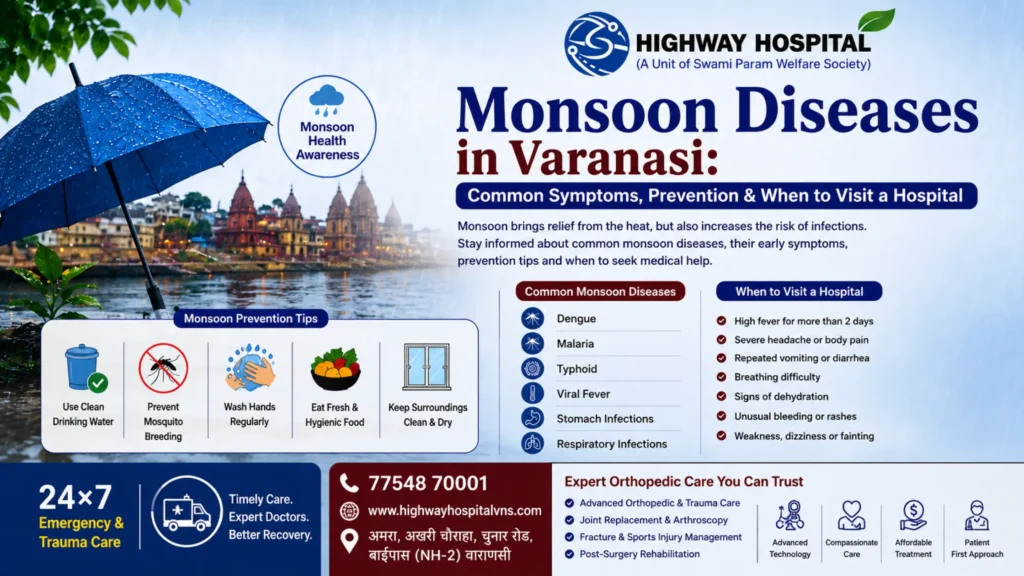
Monsoon Diseases in Varanasi: Common Symptoms, Prevention & When to Visit a Hospital
Introduction
Every year, when the monsoon arrives in Varanasi, it brings much-needed relief from the summer heat. The city, with its dense lanes, low-lying areas near the Ganga, and busy markets, also becomes more vulnerable to a familiar set of seasonal health problems.
Waterlogging after heavy rain, stagnant puddles, humidity in the air, and changes in food and water hygiene all create conditions where certain infections spread more easily. Dengue, malaria, typhoid, viral fever, stomach infections, and respiratory illnesses tend to rise during the rainy season — affecting children, elderly residents, and even otherwise healthy adults.
The good news is that most monsoon illnesses respond well to timely diagnosis and appropriate treatment. The challenge is recognising when symptoms need medical attention rather than home remedies alone.
Highway Hospital in Varanasi, located on NH-2, provides general medicine consultations, diagnostic support, and 24×7 emergency care for patients experiencing monsoon-related health concerns — from Varanasi city and surrounding areas including Chandauli, Mirzapur, Jaunpur, and Ghazipur.
Quick Answer
What are the most common monsoon diseases in Varanasi?
The most common monsoon diseases in Varanasi include dengue fever, malaria, typhoid, viral fever, gastrointestinal infections, and respiratory illnesses. These conditions spread through mosquito bites, contaminated water, unhygienic food, and close contact in humid environments. Persistent or severe symptoms require prompt medical evaluation rather than self-treatment.
Why Do Monsoon Diseases Increase During the Rainy Season?
Rain itself does not cause disease — but the conditions it creates can help infections spread more easily. Several factors contribute:
Stagnant water and mosquito breeding. Even small collections of standing water — a flower pot, a blocked drain, an uncovered water container — can become mosquito breeding sites within days. Aedes mosquitoes, which transmit dengue, and Anopheles mosquitoes, which transmit malaria, thrive in these conditions.
Contaminated drinking water. Heavy rainfall can affect water supply lines and wells, mixing clean water with runoff and sewage. This raises the risk of waterborne infections including typhoid and gastroenteritis.
Food contamination. High humidity accelerates food spoilage. Street food and uncovered cooked food can become contaminated more quickly during the monsoon, increasing the risk of stomach infections.
Poor drainage and waterlogging. Areas with inadequate drainage allow water to collect for extended periods, increasing the time available for mosquito breeding and the spread of waterborne pathogens.
Weakened personal hygiene routines. Wet weather and flooding can make regular handwashing and general hygiene more difficult, particularly in crowded areas.
According to the World Health Organization, vector-borne diseases — including dengue and malaria — account for a significant proportion of seasonal illness in South Asia, with transmission patterns closely linked to rainfall and standing water.
Common Monsoon Diseases in Varanasi
Dengue Fever
Dengue is caused by the dengue virus and spread through the bite of the Aedes aegypti mosquito, which typically bites during daytime hours. It does not spread from person to person directly.
Common symptoms include sudden high fever, severe headache, pain behind the eyes, joint and muscle pain, skin rash, and fatigue. In some cases, dengue can progress to a more serious form involving low platelet count and signs of bleeding.
Warning signs that require urgent medical attention include severe abdominal pain, persistent vomiting, bleeding from gums or nose, blood in stool or urine, rapid breathing, and unusual restlessness or confusion. These symptoms need immediate hospital evaluation — they should not be managed at home.
There is no specific antiviral medicine for dengue. Treatment is supportive, focusing on rest, fluid intake, and monitoring — with hospitalisation when required.
Malaria
Malaria in Varanasi is transmitted through the bite of the female Anopheles mosquito, which typically bites in the evening and at night.
Common symptoms include high fever — often occurring in cycles — accompanied by chills, shivering, sweating, headache, body ache, and fatigue. Nausea and vomiting are also common. If left untreated, particularly the Plasmodium falciparum form, malaria can cause serious complications.
A blood test is needed to confirm malaria and identify which type is present. Treatment involves specific antimalarial medicines prescribed by a doctor based on the type and severity of infection.
Typhoid
Typhoid fever is caused by Salmonella typhi bacteria and spreads primarily through contaminated food and water. It is more common during monsoon when water sources can be compromised.
Symptoms typically develop gradually over several days and include sustained fever, weakness, loss of appetite, headache, abdominal discomfort, and sometimes a skin rash. Without appropriate treatment, typhoid can last for weeks and lead to complications.
Diagnosis involves a clinical examination and blood or stool tests. Antibiotics prescribed by a doctor are the standard treatment — self-medication without diagnosis is not advisable.
Viral Fever
Viral fevers are among the most common complaints seen in general medicine consultations during the monsoon. They are caused by a wide variety of viruses and share overlapping symptoms — fever, body ache, fatigue, sore throat, and runny nose.
Most viral fevers resolve on their own within a few days with rest and adequate fluid intake. However, fever that persists beyond three to four days, rises to a high level, or is accompanied by other concerning symptoms should not be self-managed. A doctor’s assessment helps rule out more serious causes such as dengue or malaria, which can also present as fever with body ache.
Antibiotics do not treat viral infections. Taking antibiotics without medical advice for a fever that may be viral can be harmful and contributes to antibiotic resistance.
Monsoon Stomach Infections
Gastrointestinal infections — including diarrhea, vomiting, nausea, and abdominal discomfort — are very common during the rainy season. They are usually caused by consuming contaminated food or water.
Most mild stomach infections improve with rest, hydration, and dietary care. However, dehydration is a real risk, particularly in young children and older adults. Signs of significant dehydration include reduced urination, dry mouth, dizziness, and weakness.
Medical attention is needed when diarrhea or vomiting is severe, persistent, or accompanied by blood in the stool, high fever, or signs of dehydration that do not improve with home fluid intake.
Respiratory Infections
The combination of humidity, sudden weather changes, and crowded indoor environments during the monsoon can increase the spread of respiratory infections — including coughs, colds, sore throats, and in some cases, lower respiratory tract infections.
Most are mild and self-limiting. But breathing difficulty, persistent chest symptoms, or high fever alongside respiratory symptoms should be evaluated promptly, particularly in patients with existing lung conditions or older adults.
Common Symptoms You Should Not Ignore
Symptoms of different monsoon illnesses can overlap significantly. A high fever could be dengue, malaria, typhoid, or a viral infection — and the right treatment depends on knowing which it is. Do not delay seeking a medical opinion if you or a family member experiences:
- Persistent or high-grade fever lasting more than two to three days
- Severe headache, particularly behind the eyes
- Significant body or muscle pain
- Chills and shivering, with or without sweating
- Excessive weakness or fatigue
- Vomiting, particularly if repeated or severe
- Diarrhoea, especially with blood in the stool
- Abdominal pain
- Signs of dehydration — reduced urination, dry mouth, dizziness
- Skin rash
- Bleeding from gums, nose, or in urine or stool
- Difficulty breathing or chest discomfort
- Confusion, fainting, or unusual drowsiness
These symptoms may not always indicate a serious condition, but a proper clinical assessment and appropriate testing are the only reliable way to determine the cause and appropriate management.
Monsoon Diseases – Symptoms at a Glance
| Disease | Common Symptoms | When to Seek Help |
| Dengue | High fever, headache, body ache, rash | If fever persists, or bleeding signs appear |
| Malaria | Cyclic fever, chills, sweating, fatigue | Blood test needed for confirmation |
| Typhoid | Sustained fever, weakness, stomach symptoms | If fever persists beyond 4–5 days |
| Viral Fever | Fever, fatigue, body ache, sore throat | If fever persists or worsens beyond 3 days |
| Stomach Infection | Diarrhoea, vomiting, abdominal discomfort | If dehydration or blood in stool present |
| Respiratory Infection | Cough, sore throat, breathing difficulty | If breathing is affected or fever is high |
Note: Symptoms alone cannot confirm a diagnosis. A doctor’s evaluation and appropriate tests are needed.
When Should You Visit a Hospital?
Many people wait too long before seeking medical help during monsoon, either hoping the fever will pass or relying on over-the-counter medicines. There are situations where timely hospital evaluation is genuinely important:
- Fever that does not improve or worsens after two to three days
- Fever in children under five, pregnant women, or elderly patients — these groups need earlier evaluation
- Severe weakness that limits normal activity
- Repeated vomiting that prevents keeping fluids down
- Signs of dehydration despite attempts to drink fluids
- Difficulty breathing or chest pain
- Severe abdominal pain
- Blood in vomit, stool, or urine
- Skin rash alongside fever
- Confusion, reduced consciousness, or fainting
- Symptoms that seem to be getting rapidly worse
Emergency warning: If any symptom is severe or progressing quickly — particularly breathing difficulty, uncontrolled bleeding, or loss of consciousness — do not wait. Seek emergency care immediately. The 24×7 emergency department at Highway Hospital is available round the clock for urgent medical situations.
How Can You Prevent Monsoon Diseases?
Prevention is significantly more effective than treatment when it comes to seasonal illnesses. Practical steps that genuinely help:
Prevent Mosquito Breeding
- Remove standing water from around your home — check flower pots, water containers, roof gutters, and open drains weekly
- Keep water storage containers tightly covered
- Use mosquito nets, repellents, and protective clothing — particularly during evening hours when Anopheles mosquitoes are active and early morning when Aedes mosquitoes bite
Drink Safe Water
- Use filtered, boiled, or packaged water for drinking
- Avoid water from unknown or potentially contaminated sources during and after heavy rainfall
- Be particularly careful with water used for preparing food and making ice
Follow Food Hygiene
- Eat freshly cooked food and avoid food that has been sitting out for extended periods
- Wash fruits and vegetables thoroughly with clean water before eating
- Be cautious with street food during monsoon — exposure and preparation conditions can increase contamination risk
Maintain Personal Hygiene
- Wash hands with soap regularly, especially before eating and after using the toilet
- Keep your home and surroundings clean and dry where possible
- Dispose of garbage in covered bins to reduce breeding sites
Protect Vulnerable Family Members
- Pay closer attention to fever and unusual symptoms in children, elderly family members, and those with existing medical conditions
- Do not delay a medical consultation when symptoms persist or concern you
The National Health Portal of India provides verified guidance on dengue and monsoon disease prevention that is worth reviewing.
Diagnosis and Treatment of Monsoon Illnesses
An accurate diagnosis is the foundation of appropriate treatment. A doctor may recommend:
- Clinical examination — history of symptoms, duration, and associated complaints
- Blood tests — complete blood count (CBC) is important for assessing dengue (platelet count) and general infection markers
- Dengue NS1 antigen test or dengue antibody test — for suspected dengue cases
- Malaria rapid diagnostic test or blood smear — for suspected malaria
- Widal test or blood culture — for suspected typhoid
- Stool and urine tests — where clinically appropriate
Treatment depends entirely on the confirmed diagnosis. It may include:
- Supportive care — rest, adequate fluid intake, fever management
- Specific medicines — antimalarials for malaria, appropriate antibiotics for confirmed bacterial infections like typhoid (prescribed by a doctor)
- Intravenous fluids — when oral hydration is insufficient
- Monitoring and hospitalisation — for patients with complications or those who are not improving
Important: Antibiotics should never be taken without a doctor’s prescription. Not every fever has a bacterial cause, and unnecessary antibiotic use does not speed recovery — it can cause harm and contributes to drug resistance.
Monsoon Healthcare at Highway Hospital, Varanasi
Highway Hospital on NH-2 provides a range of services relevant to monsoon illness management:
- General Medicine consultations — assessment of fever, infections, and related symptoms by experienced physicians. Visit the General Medicine department page for more information.
- Diagnostic laboratory services — blood tests including CBC, dengue testing, malaria testing, and other investigations available on-site
- Inpatient care — ward and ICU facilities for patients who require hospitalisation and monitoring
- 24×7 Emergency Department — for urgent cases requiring immediate attention
- Paediatric support — for children presenting with monsoon-related illness
- Facilities and infrastructure — modern diagnostic and clinical facilities available round the clock. See our hospital facilities page for full details.
The hospital serves patients from Varanasi city and surrounding areas including Chandauli, Mirzapur, Jaunpur, Ghazipur, Sonbhadra, Bhadohi, and nearby districts of Eastern Uttar Pradesh. Its NH-2 location makes it accessible from the national highway and from the wider region.
Why Choose Highway Hospital for Monsoon Health Concerns?
Experienced Medical Team — Highway Hospital has qualified physicians and specialists across multiple departments. General medicine physicians are available to assess and manage fever, infections, and related conditions.
On-Site Diagnostics — Blood tests, dengue testing, malaria testing, and other investigations are available within the hospital, reducing the need to visit separate diagnostic centres.
24×7 Availability — Emergency and critical care services are available round the clock. Patients with severe symptoms do not need to wait for business hours.
Comprehensive Care Under One Roof — From initial consultation and diagnosis through to inpatient monitoring and specialist referral where needed, services are available within the same facility.
Transparent, Patient-Focused Approach — Highway Hospital has served the Varanasi region since 1990, with a focus on accessible healthcare and honest communication with patients and families.
Ayushman Bharat Accepted — Eligible patients can access treatment under the PM-JAY scheme. CGHS and ECHS are also accepted.
Meet Our Medical Experts
Dr. Vivek Rai — General Medicine MBBS, MD (Medicine). Dr. Vivek Rai provides general medicine consultations at Highway Hospital, including assessment and management of fever, infections, and acute medical conditions. He is available for consultations covering monsoon-related illnesses and related concerns.
Dr. Raja Singhal Singh — Nephrologist & Internal Medicine MBBS, MD (Internal Medicine – Gold Medalist), DM (Nephrology, PGI SSKM Kolkata). Dr. Raja Singhal Singh brings strong internal medicine expertise and is available for complex fever and infection cases where internal medicine specialist input may be needed.
For a full list of our medical team, please visit our doctors page.
Why Trust Highway Hospital?
Experience
Highway Hospital has been providing healthcare services in Varanasi since 1990. Over three decades, the hospital has managed a wide range of medical conditions, including seasonal illnesses across many monsoon cycles. This operational experience informs how the team prepares for and responds to seasonal health demands.
Expertise
The hospital’s medical team includes qualified physicians, specialists, and surgeons with verified academic and professional credentials. General medicine services are provided by trained doctors experienced in diagnosing and managing infections, fevers, and acute illnesses.
Authoritativeness
Highway Hospital is a registered multi-specialty hospital on NH-2, Varanasi, empanelled with government schemes including Ayushman Bharat (PM-JAY), CGHS, and ECHS. It is a recognized healthcare provider serving Varanasi and the wider Eastern UP region.
Trustworthiness
The hospital is committed to transparent pricing, evidence-based clinical practice, and honest communication with patients. Treatment recommendations are based on clinical assessment and appropriate diagnostic results — not assumption or convenience.
Monsoon Healthcare for Patients in Varanasi and Nearby Areas
Highway Hospital is located directly on Delhi-Kolkata National Highway (NH-2) at Amara Akhari Chauraha, Chunar Road Bypass, Varanasi. This location makes it accessible not only for Varanasi city residents but also for patients travelling from Chandauli, Mirzapur, Jaunpur, Ghazipur, Sonbhadra, and other parts of Eastern Uttar Pradesh.
During the monsoon season, when roads and transport can be unpredictable, having a hospital on a national highway with 24×7 emergency facilities is particularly relevant for patients from surrounding districts who need urgent care.
Learn more about Highway Hospital’s services and facilities on our multispeciality hospital overview page.
Conclusion
Monsoon diseases are common in Varanasi, but they are not inevitable — and most are manageable with timely diagnosis and appropriate care. Understanding which symptoms need medical attention, taking practical prevention steps, and avoiding the temptation to self-medicate with antibiotics or delay treatment are the most important things any family can do this season.
If you or a family member has persistent fever, severe weakness, repeated vomiting, signs of dehydration, difficulty breathing, or any other concerning symptoms during the monsoon, consult a qualified healthcare professional promptly. Early evaluation leads to faster, safer recovery.
For medical consultation, general medicine services, diagnostic support, and emergency care in Varanasi, contact Highway Hospital on NH-2.
📞 Emergency & Appointments: +91 7754870001 | +91 8299004826 | +91 9455004097
📍 Amara Akhari Chauraha, Chunar Road, Bypass NH-2, Varanasi
🌐 https://highwayhospitalvns.com/
Stay Connected with Highway Hospital
Follow Highway Hospital on social media for regular monsoon health tips, preventive care advice, doctor awareness content, and hospital updates:
📘 Facebook: https://www.facebook.com/highwayhospitalvaranasi/ 📸 Instagram: https://www.instagram.com/highway.hospital/
FAQs
Q1. What are the most common monsoon diseases in Varanasi?
The most common monsoon diseases in Varanasi include dengue fever, malaria, typhoid, viral fever, gastrointestinal infections such as diarrhoea and vomiting, and respiratory illnesses like coughs and colds. These spread through mosquito bites, contaminated water and food, and close contact in humid environments. Early medical evaluation is important when symptoms are persistent or severe.
Q2. What are the early symptoms of dengue?
Early dengue symptoms typically include sudden high fever, severe headache, pain behind the eyes, significant joint and muscle pain, fatigue, and sometimes a skin rash. These symptoms can appear two to seven days after a mosquito bite. A blood test is needed to confirm dengue. Seek medical attention if fever persists for more than two days or warning signs appear.
Q3. How can I prevent malaria during monsoon?
Preventing malaria involves reducing mosquito exposure and eliminating breeding sites. Use mosquito nets and repellents, wear full-sleeved clothing during evening hours, and remove stagnant water from around your home. Ensure water containers are tightly covered. If you develop fever with chills and sweating during monsoon, seek a blood test — early treatment of malaria is effective and important.
Q4. When should I see a doctor for fever?
See a doctor if fever persists for more than two to three days, rises to a high level, or is accompanied by other symptoms such as severe body ache, rash, vomiting, or bleeding signs. Children under five, elderly patients, and pregnant women should be evaluated earlier. Do not rely on over-the-counter medicines alone for persistent monsoon fever without knowing the cause.
Q5. Can monsoon stomach infections cause dehydration?
Yes. Repeated vomiting and diarrhoea from stomach infections can lead to dehydration, which can become serious — particularly in young children and older adults — if fluid losses are not replaced. Signs include reduced urination, dry mouth, dizziness, and weakness. Mild cases can be managed with oral rehydration. Medical attention is needed when dehydration is significant or symptoms are severe.
Q6. Where can I get medical treatment for monsoon illnesses in Varanasi?
Highway Hospital on NH-2, Varanasi provides general medicine consultations, on-site diagnostic testing including dengue and malaria tests, inpatient care, and 24×7 emergency services. The hospital serves patients from Varanasi and surrounding districts of Eastern UP. Ayushman Bharat, CGHS, and ECHS are accepted. Call +91 7754870001 for appointments or emergency assistance.